Uptime monitoring moves in-house with improved privacy and useful features

We’re excited to announce that Watchful has completed the transition to its own uptime monitoring service. This change gives us greater control over how we monitor websites, improves our approach to privacy, and introduces useful new features for agencies managing WordPress and Joomla! websites.
Our new monitoring service replaces the third-party UptimeRobot integration that Watchful has used since 2014.
Most importantly, we’re retaining the monitoring features our customers depend on while creating a foundation for future improvements.
Why we brought uptime monitoring in-house
Uptime monitoring helps website managers detect outages and respond before small problems become major disruptions.
Watchful checks websites at regular intervals and records their availability. When a website goes offline, notifications help site managers investigate the problem. Once the website becomes available again, Watchful records its recovery.
Previously, we relied on UptimeRobot to perform these checks. Although that integration served us well, it limited our control over how the monitoring service operated.
By developing our own privacy-friendly, bespoke monitoring service, we now have direct control over:
- Monitoring infrastructure: The servers and geographic locations used to check websites.
- Monitoring intervals: How frequently uptime checks run.
- IP addresses and user agents: How our monitoring service identifies itself to websites, hosting providers, and security systems.
- Monitoring data: The information we collect and retain to calculate uptime statistics.
- Future development: The ability to improve monitoring without depending on a third-party provider’s features or development schedule.
This change also supports our ongoing commitment to privacy and responsible data handling, including our GDPR compliance efforts.
What’s new with Watchful uptime monitoring?
Our goal was to make the transition as seamless as possible while introducing improvements that make website maintenance easier.
Here are the most important changes.
Pause and resume uptime monitoring
One of the most useful new features is the ability to temporarily pause uptime monitoring without deleting the monitor.
During major website updates, migrations, or scheduled maintenance, your website may become unavailable for a short period. Without the ability to pause monitoring, these planned interruptions can generate unnecessary downtime notifications.
You can now pause a monitor before maintenance and resume it when your work is complete.
Pausing a monitor also preserves its existing uptime history. This is particularly useful for agencies that include uptime statistics in their client reports.
Unlike deleting a monitor, pausing it provides a way to temporarily suspend checks without discarding the monitoring records you have already collected.
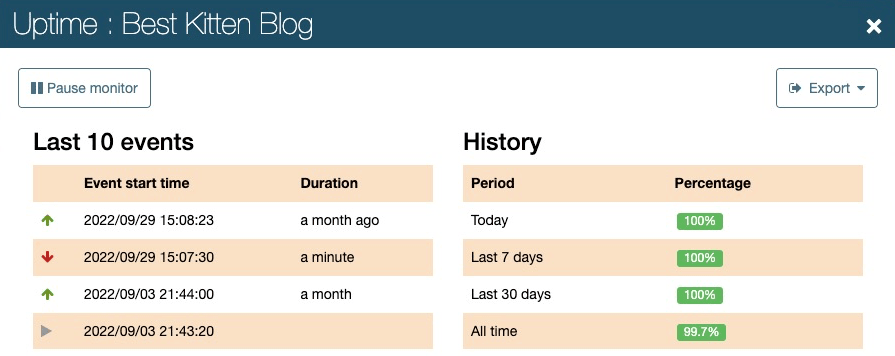
uptime modal now features a pause button at the top-left.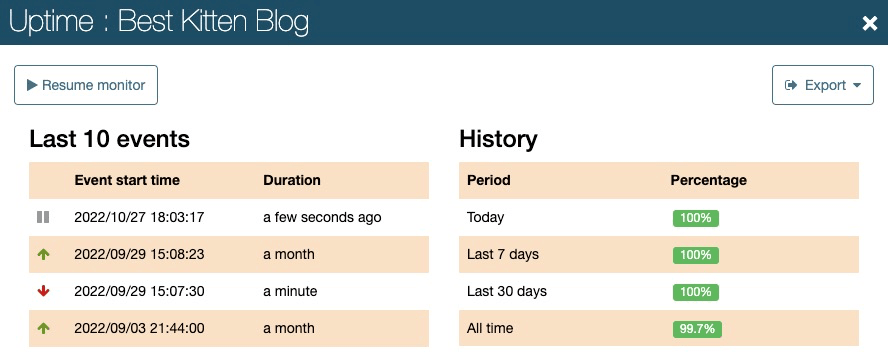
resume monitor button.A new five-minute monitoring interval
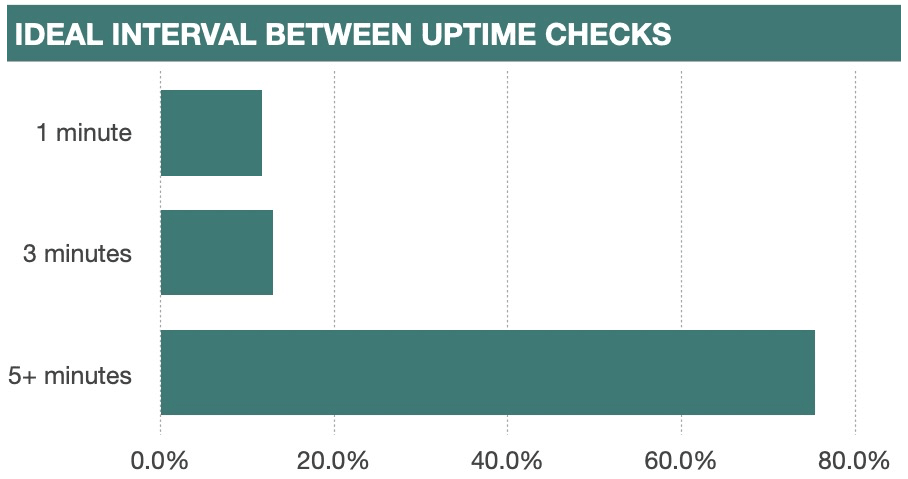
We’ve changed the default monitoring interval from one check per minute to one check every five minutes.
This decision followed a survey of Watchful customers, who expressed a strong preference for less frequent checks.
The five-minute interval provides a practical balance between detecting website outages and reducing unnecessary monitoring activity.
For agencies managing dozens or hundreds of websites, this approach helps keep monitoring efficient and avoids excessive requests to client websites.
New monitoring servers around the world
Our new service uses Watchful-controlled monitoring infrastructure distributed across multiple geographic locations.
These external checks help us determine whether a website is accessible independently of the Watchful client installed on the website.
Because we’re using new infrastructure, the IP addresses responsible for monitoring have also changed.
If your website uses a web application firewall, security plugin, hosting firewall, or a service such as Cloudflare, you may need to allow requests from our monitoring servers.
See our IP address and user agent documentation for additional information.
All your existing monitoring features remain available
In addition to these improvements, we’ve retained the monitoring tools already available in Watchful.
Uptime and downtime notifications
Watchful continues to notify you when a monitored website becomes unavailable and when it recovers.
These notifications help agencies investigate outages promptly without manually checking every website they manage.
Uptime history and statistics
Watchful records website availability over time so you can review uptime performance and identify service interruptions.
This historical information helps you understand website reliability and provides a record of availability for your clients.
Homepage content monitoring
A website can return a successful HTTP response even when its content is incomplete or incorrect.
To help detect these problems, Watchful can check for a specific word or phrase in the website’s homepage content.
For example, you might monitor a word in the footer of your website. If that content is missing from the response, it may indicate that the page has not loaded as expected.
This adds another useful check beyond simply determining whether the web server responds.
SSL certificate expiration monitoring
Website availability isn’t just about responding to HTTP requests. An expired SSL certificate can also prevent visitors from accessing a website securely.
Watchful continues to monitor SSL certificate expiration and provide notifications so you can renew certificates before they expire.
This helps agencies avoid disruptions caused by expired certificates.
Bulk uptime monitor management
Managing uptime across a large portfolio shouldn’t require repetitive work on individual websites.
Watchful retains the ability to create and delete uptime monitors using bulk actions from the sites dashboard.
This makes it easier to manage monitoring across groups of websites and keep your monitoring configuration organized.
Uptime statistics in client reports
Website reliability is an important part of the maintenance services that agencies provide.
Watchful continues to include uptime statistics in client reports, allowing you to demonstrate website availability alongside other maintenance activities.
Combined with the new pause and resume feature, this gives agencies greater control over how monitoring fits into their maintenance and reporting workflows.
Designed for agencies managing multiple websites
Bringing uptime monitoring in-house is about more than replacing a third-party service.
It allows us to bring monitoring more closely into the Watchful website management workflow.
For agencies, that means being able to manage uptime alongside software updates, backups, security checks, SSL monitoring, and client reporting from a single platform.
It also means we can continue developing monitoring features based directly on customer feedback.
The new service gives us the flexibility to make those improvements while maintaining control over the infrastructure and monitoring data.
Getting started with uptime monitoring
Uptime monitoring is available to Watchful Premium customers.
Watchful automatically creates uptime monitors for eligible websites, and you can manage individual monitors from the sites dashboard.
To learn more about viewing uptime statistics, pausing monitors, checking homepage content, and managing monitors in bulk, see our uptime monitoring documentation.
If you’re having trouble with monitoring, our documentation also provides guidance on firewall restrictions, monitoring requests, and other common issues.
We’re excited about what this change means for Watchful and the additional improvements it will make possible.


0 Comments